Gluttony
Gluttony, the inordinate desire for food and drink, occupies a distinct place in Dante's moral geography. In the Inferno, it is the sin punished in the Third Circle, a realm of eternal, foul precipitation where the gluttonous lie prostrate, battered by a mixture of hail, snow, and putrid water. In the Purgatorio, it is purged on the Sixth Terrace, where the penitent suffer an agonizing hunger and thirst, their emaciated bodies a visible testament to their former excess. The sin is treated not merely as a physical failing but as a perversion of the natural appetite, a disorder that the poem's justice systematically corrects through symmetrical punishment and purification.
The Third Circle of Hell: Punishment of the Gluttonous
The Third Circle is a place of relentless, disgusting weather. An eternal rain, described as "maledict, and cold, and heavy," pours down, composed of "huge hail, and water sombre-hued, and snow" that makes the earth noisome. The souls of the gluttonous lie prone in this filth, and the monster Cerberus, with his three throats, barks over them, rending and flaying them with his claws. The punishment is a direct contrapasso: as the gluttonous in life sought only the pleasures of the palate, now they are immersed in a repulsive, unending storm, their senses assaulted by cold and stench. The only soul named in this circle is Ciacco, a Florentine, who explains that he and all the others suffer for the "pernicious sin of gluttony." Ciacco's brief conversation with Dante reveals that the punishment is not merely physical; it also carries a social and political dimension, as Ciacco prophesies the future strife of Florence, linking the city's discord to the moral decay of its citizens.
The Sixth Terrace of Purgatory: Purification through Hunger and Thirst
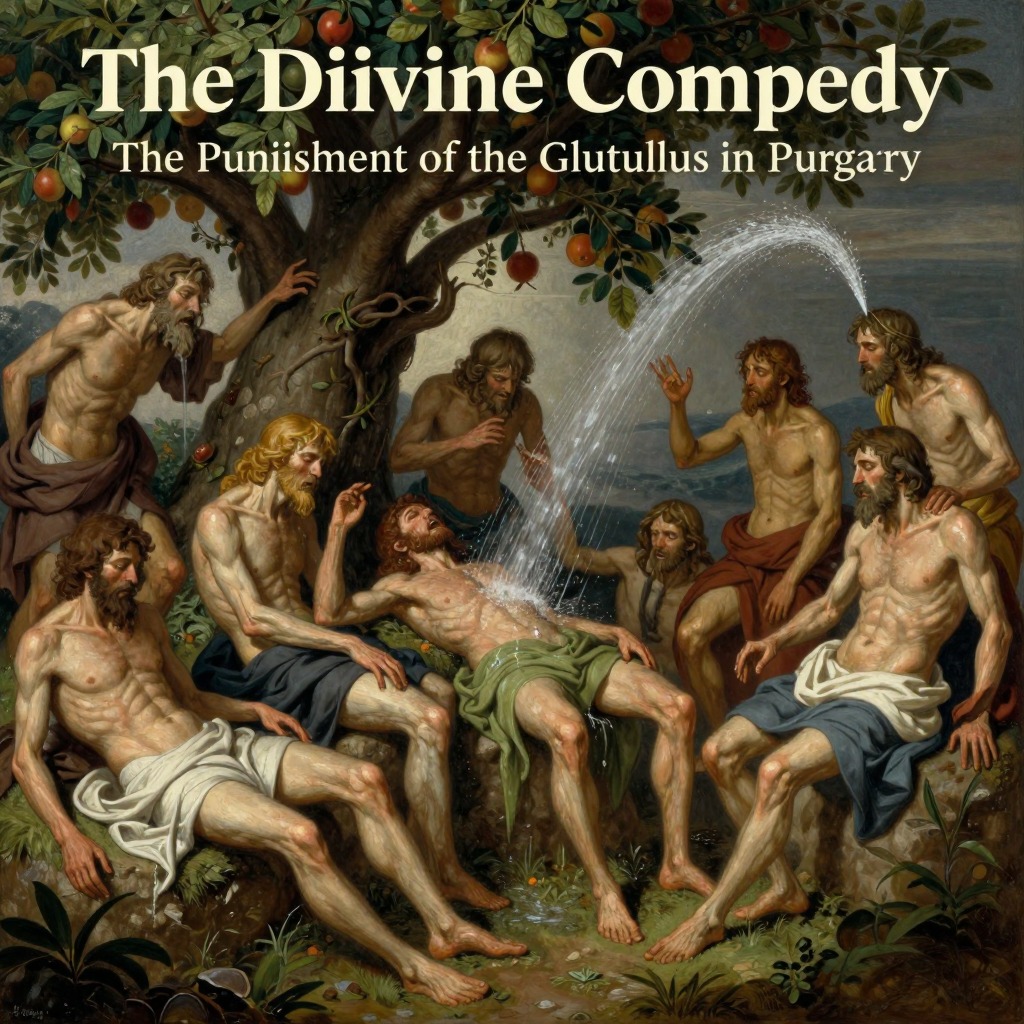
On the Sixth Terrace of Purgatory, the penitent gluttons undergo a different kind of correction. They are emaciated, their skin stretched tight over their bones, their eyes sunken and cavernous. They move slowly, singing and weeping, tormented by the sight and scent of a fruit-laden tree and a stream of water that they cannot reach. The tree, described as tapering downward like a fir, is laden with apples that smell sweet, and a clear stream falls from the rock onto its leaves. The penitents are driven by an intense desire to eat and drink, but the tree and water are placed just out of reach, and a voice from the branches warns them, "Of this food ye shall have scarcity." This is a purgation of the will: the gluttons, who once indulged without restraint, now learn to desire in moderation, their suffering a means of reordering their love. The process is not merely punitive but restorative, as the souls themselves recognize that the pain is also a solace, for it leads them toward God.
The Contrapasso and Moral Logic
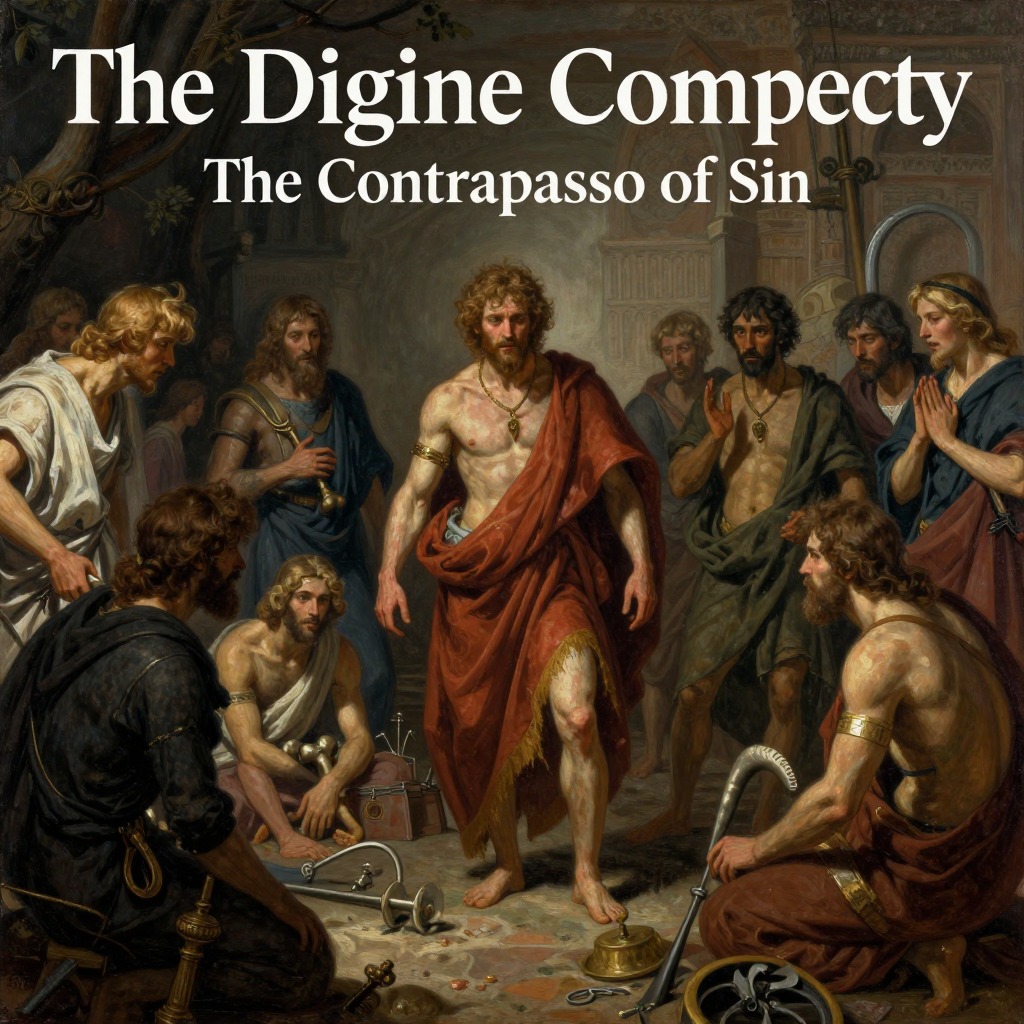
The contrapasso for gluttony operates on a principle of inversion and mirroring. In Hell, the gluttons are immersed in filth and cold, a stark reversal of the warmth and pleasure they sought in food and drink. In Purgatory, they are starved and parched, their bodies wasting away as they are denied the very substances they once craved. The punishment in Hell is eternal and without hope, while the purgation on the mountain is temporary and purposeful, leading to eventual liberation. The moral logic is rooted in the idea that gluttony is a sin of excess, a failure to moderate a natural appetite. The poem's justice, therefore, applies a corrective that forces the soul to experience the consequences of its disorder, either as an eternal state of deprivation or as a painful but healing discipline.
The Role of Cerberus and the Tree
Cerberus, the three-headed dog of classical mythology, serves as the guardian and tormentor of the gluttons in Hell. His barking and clawing add a layer of bestial violence to the punishment, emphasizing the degradation of the sin. Virgil pacifies Cerberus by throwing handfuls of earth into his gullets, a gesture that momentarily quiets the monster and allows the poets to pass. In Purgatory, the tree and the stream are the instruments of purification. The tree is explicitly linked to the Tree of Knowledge, from which Eve ate, and its fruit is a constant reminder of the original sin of disobedience through appetite. The penitents circle the tree, their desire for its fruit a mirror of their former gluttony, but now they are learning to resist. The voice from the branches cites examples of temperance, including Mary, who was more concerned with the marriage feast than with her own hunger, and the Baptist, who ate locusts and honey in the wilderness.
Thematic Significance
Gluttony in the Divine Comedy is more than a personal failing; it is a symptom of a broader moral disorder that affects the individual and society. Ciacco's prophecy links the gluttony of Florence's citizens to the city's political turmoil, suggesting that the inability to control appetite leads to a breakdown of civic harmony. In Purgatory, the purification of gluttony is part of the soul's journey toward the Earthly Paradise, where the will is finally aligned with God's. The sin is thus a key example of how Dante uses the physical to express the spiritual, creating a vivid, memorable image of the consequences of excess and the possibility of redemption through suffering.